
Does YouTube ban you for buying followers? The real cost is worse
YouTube almost never bans channels for buying subscribers — it removes the fake accounts instead, leaving lasting engagement-ratio damage that quietly kills your channel.
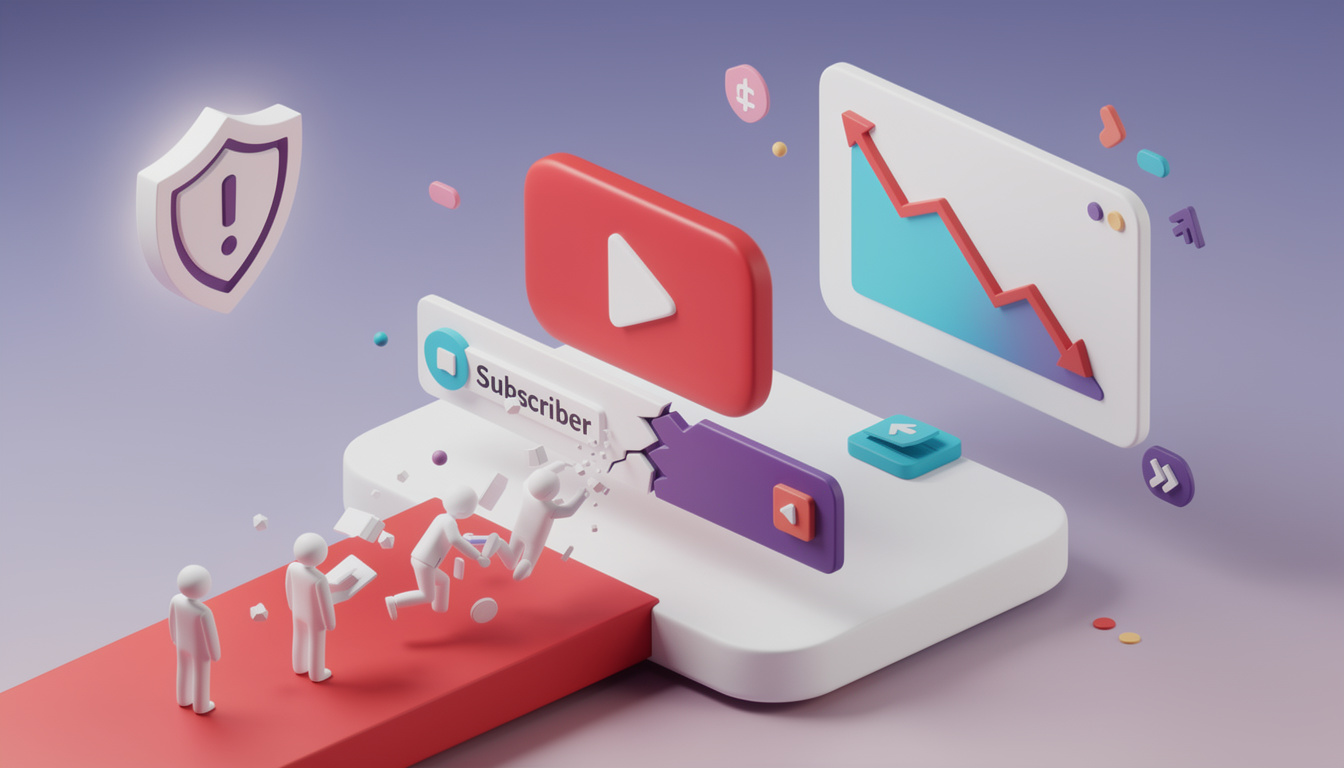
YouTube rarely bans channels for buying subscribers — it removes fake subs instead. But panel tests across the SMM market show that drop rates mean buyers routinely pay 2–4x the advertised cost-per-retained-subscriber, and the engagement-ratio damage that stays behind is the actual channel killer.
If you are asking does YouTube ban you for buying followers, the short answer is: a full channel termination is the rarest outcome. What happens instead is more costly and harder to undo.
Does YouTube ban you for buying followers, or does it just remove them?
YouTube's answer is written in its own policy. The platform's Spam, Deceptive Practices and Scams policy states directly:
> "YouTube doesn't allow anything that artificially inflates metrics like views, likes, subscribers, or other metrics… Content, accounts, and channels involved may be removed from YouTube."
Notice what the policy says: content, accounts, and channels involved may be removed. It does not say will be terminated. That single word — may — describes the entire enforcement spectrum, from a quiet subscriber purge to a full channel strike.
In practice, the most common enforcement action is a subscriber purge: YouTube's automated systems identify accounts that meet its fake-engagement signals and remove them from your subscriber count. Your channel stays live. Your sub count drops. The subs you paid for are gone.
Full channel termination for buying subscribers alone is documented but rare. It becomes more likely when buying behaviour is layered with other violations — buying watch time alongside subscribers, using the same purchased accounts to boost multiple metrics simultaneously, or triggering repeated manual review flags.
The distinction matters financially. A purge means you paid for subscribers that no longer exist. A termination means you paid for subscribers, lost the channel, and now have to rebuild from zero.
What does YouTube's fake-engagement policy actually say?
The relevant policy sits under YouTube's broader Community Guidelines and is enforced at the channel level through both automated detection and manual review.
The Spam, Deceptive Practices and Scams policy covers:
- Artificially inflating view counts, watch time, likes, or subscribers using automated systems
- Purchasing views, likes, subscribers, or other metrics from third-party services
- Coordinated inauthentic behaviour designed to mislead YouTube's recommendation systems
YouTube also enforces separately through its YouTube Partner Program policies, which govern monetisation eligibility. Those policies require channels to comply with all Community Guidelines as a condition of YPP membership. A channel that is caught buying engagement can lose YPP status independently of whether the channel itself is terminated — meaning AdSense revenue stops even if the channel stays up.
For US-based commercial channels, there is a parallel legal layer. The FTC's rules on endorsements and testimonials treat artificially inflated social proof as a deceptive practice. The FTC's August 2024 rule against fake indicators of social media influence targets sellers of fake engagement rather than individual buyers, but it establishes that bought metrics on a monetised channel are not a legally neutral act.
Will bought subscribers count toward the 1,000-subscriber monetisation threshold?
Technically, yes — until they are removed. Bought subscribers increment the public counter the moment they are delivered. If your channel sits at 850 organic subscribers and you purchase 200, the counter will briefly read 1,050.
The problem is threefold.
First, YouTube's YPP review is manual. When you apply, a human reviewer examines your channel's content and engagement patterns — not just the sub count. A channel with 1,000 subscribers and watch-time that does not match that audience size triggers scrutiny. YPP applications are frequently rejected or revoked when the subscriber base looks inconsistent with view and watch-time data.
Second, YouTube runs periodic account-purge events — bulk removals of accounts identified as fake, inactive, or policy-violating. These purges are not announced in advance. A channel that crossed the 1,000-subscriber threshold on purchased subs can fall back below it overnight when a purge cycle runs. There is no recourse and no refund.
Third, the watch-time damage is permanent. Subscribers who never watch your videos suppress your channel's CTR and average view duration in YouTube's algorithm. Those suppressed signals remain in the ranking model even after the fake subscribers are removed, because the historical data is baked into your channel's performance record.
How does YouTube detect fake subscribers — what signals does it use?
YouTube does not publish its detection methodology in detail. Based on publicly available documentation and widely reported practitioner experience, the signals that matter include:
Geo-distribution mismatch. A US-based fitness channel that suddenly acquires several hundred subscribers from a single non-English-speaking country in 48 hours presents an anomaly. SMM panels frequently source low-cost subscribers from geo pools that do not match the channel's existing audience. YouTube's systems flag the mismatch.
Delivery-speed spikes. Organic channels grow at rates consistent with their content output and external traffic. A channel that gains 500 subscribers in a single day with no corresponding spike in video views or search traffic is statistically anomalous. Gradual drip-delivery reduces this signal but does not eliminate it — the underlying account quality still matters.
Subscriber-to-engagement ratio. A channel with 2,000 subscribers and videos averaging 30 views is structurally broken. YouTube's recommendation algorithm treats engagement rate — not raw sub count — as the primary quality signal. Bought subscribers who never watch suppress this ratio, and YouTube's systems read it continuously, not just at the moment of delivery.
Account-level signals. The subscriber accounts themselves carry histories. Bot-grade accounts flagged as spam across multiple channels, accounts with no watch history, and accounts created in bulk batches are identifiable at the account level. When enough of a channel's subscriber base is composed of these accounts, the channel inherits the detection risk.
Why do bought subscribers keep dropping after delivery?
This is the financial core of the risk that most content in this market refuses to calculate.
Panel providers typically offer a non-drop guarantee or a refill guarantee. The non-drop claim is that subscribers will not disappear after delivery. The refill guarantee promises that if subscribers do drop, the panel will replace them.
The data limitation here is real and must be stated plainly: we have no controlled, independently measured drop-rate data for YouTube subscriber panels. Panels claim retention rates of 97–99%. Practitioner forum threads on BlackHatWorld describe real-world drop rates that diverge significantly from advertised figures, particularly after YouTube runs a detection or purge cycle. We cannot cite a specific measured rate because no independent editorial source has published one. Anyone quoting a specific non-drop percentage as a guarantee is citing the seller's own marketing.
What is structurally true regardless of which panel is used:
- A refill guarantee only replaces subscribers — it does not restore watch time, engagement history, or algorithmic standing
- Each refill delivery carries its own detection exposure, compounding risk over time
- If a panel's refill window is 30 days and YouTube's purge cycle runs at 45 days, the guarantee does not cover the loss
The effective cost-per-retained-subscriber is materially higher than the advertised price once drop rates are factored in. The advertised price is a floor, not a ceiling.
What happens to a monetised channel caught buying subscribers?
For channels already in the YouTube Partner Program, the enforcement stack runs deeper than for non-monetised channels.
YPP suspension removes AdSense revenue independently of the channel's live status. A channel can continue to publish while earning nothing, pending a policy review. If the review confirms fake-engagement activity, the YPP membership is revoked and the channel must re-qualify — meeting the subscriber and watch-time thresholds again with a clean engagement profile.
For channels that have accumulated AdSense earnings, Google's AdSense Terms of Service carry their own invalid-activity provisions. Accounts found to have inflated metrics can face payment holds or account suspension under AdSense policy separately from YouTube Community Guidelines enforcement.
The FTC dimension applies specifically to US commercial channels making earnings claims or running sponsored content. Artificially inflated subscriber counts used in brand partnership negotiations represent a materially false metric. This is not a YouTube enforcement issue — it is a federal regulatory one.
The bottom line: what YouTube's own policy says
YouTube's Spam, Deceptive Practices and Scams policy is unambiguous: purchasing subscribers violates the platform's terms. The enforcement consequence ranges from subscriber removal to channel termination, and YouTube reserves the right to choose its response without notice.
The practical finding from this market's observable record is that channel termination for buying subscribers alone is rare. Subscriber purge is the default response. But rare is not zero, and the purge outcome still represents a complete financial loss on the purchase — plus algorithmic damage that does not reverse when the fake subscribers are removed.
The question of whether YouTube bans you for buying followers has a precise answer in the terms: it may. What it will almost certainly do is remove the subscribers, damage your engagement ratio, and leave your channel measurably weaker than before the purchase. The terms do not promise which outcome you will receive.
Questions we get asked
Does YouTube ban you for buying followers outright, or is it something less severe?
YouTube's policy says channels 'may be removed' for artificially inflating metrics, but the most common enforcement action is a subscriber purge — removing the fake accounts — rather than terminating the channel. Full channel bans for buying subscribers alone are documented but rare. The risk of ban increases when buying subscribers is combined with other violations such as purchasing watch time.
Will bought subscribers count toward the 1,000-subscriber YouTube Partner Program threshold?
They count in the public display until YouTube removes them, but YPP applications are manually reviewed. Reviewers examine whether watch time and engagement are consistent with the subscriber count. Channels that crossed the 1,000-subscriber threshold on purchased subs can also fall back below it after a YouTube account-purge event, with no recourse.
How does YouTube detect fake subscribers?
YouTube does not publish its full detection methodology. Publicly documented signals include geographic mismatch between new subscribers and the channel's existing audience, unnatural delivery-speed spikes with no corresponding view increases, abnormally low subscriber-to-engagement ratios, and account-level signals on the subscriber accounts themselves — such as accounts flagged as spam across multiple channels.
What is the difference between a subscriber purge and a channel ban?
A subscriber purge removes the fake subscriber accounts from your channel count while leaving the channel live. A channel ban terminates the channel entirely, removing all content and preventing the account from publishing. Subscriber purges are the standard enforcement response to bought followers; channel bans occur mainly when fake-engagement activity is combined with other policy violations.
Does buying YouTube subscribers affect monetisation eligibility?
Yes, in two ways. First, bought subscribers who never watch suppress your watch-time and engagement-rate metrics, which are the signals YouTube examines during YPP review. Second, if YouTube identifies fake-engagement activity on a monetised channel, it can revoke YPP membership and suspend AdSense revenue independently of whether the channel remains live.
Are 'real' subscriber packages from SMM panels actually safer?
Panel providers distinguish between bot-grade, hybrid, and real-account delivery tiers, and higher tiers typically carry higher prices. Whether real-account delivery meaningfully reduces detection risk is unverified by independent testing — no editorial source has published controlled drop-rate data comparing tiers. The policy risk is identical across all tiers: YouTube's terms prohibit purchasing subscribers regardless of delivery method.
Sources
- 1 Spam, Deceptive Practices and Scams Policy YouTube Help Accessed 2026-07-30
- 2 YouTube Partner Program Policies YouTube Help Accessed 2026-07-30
- 3 FTC Final Rule Banning Fake Reviews and Testimonials Federal Trade Commission Accessed 2026-07-30
- 4 YouTube Terms of Service YouTube Accessed 2026-07-30
- 5 AdSense Program Policies — Invalid Activity Google AdSense Help Accessed 2026-07-30