
Does LinkedIn ban you for buying followers? The real risk in 2026
LinkedIn's own User Agreement prohibits bought followers outright — the real question is which enforcement tier hits you first.
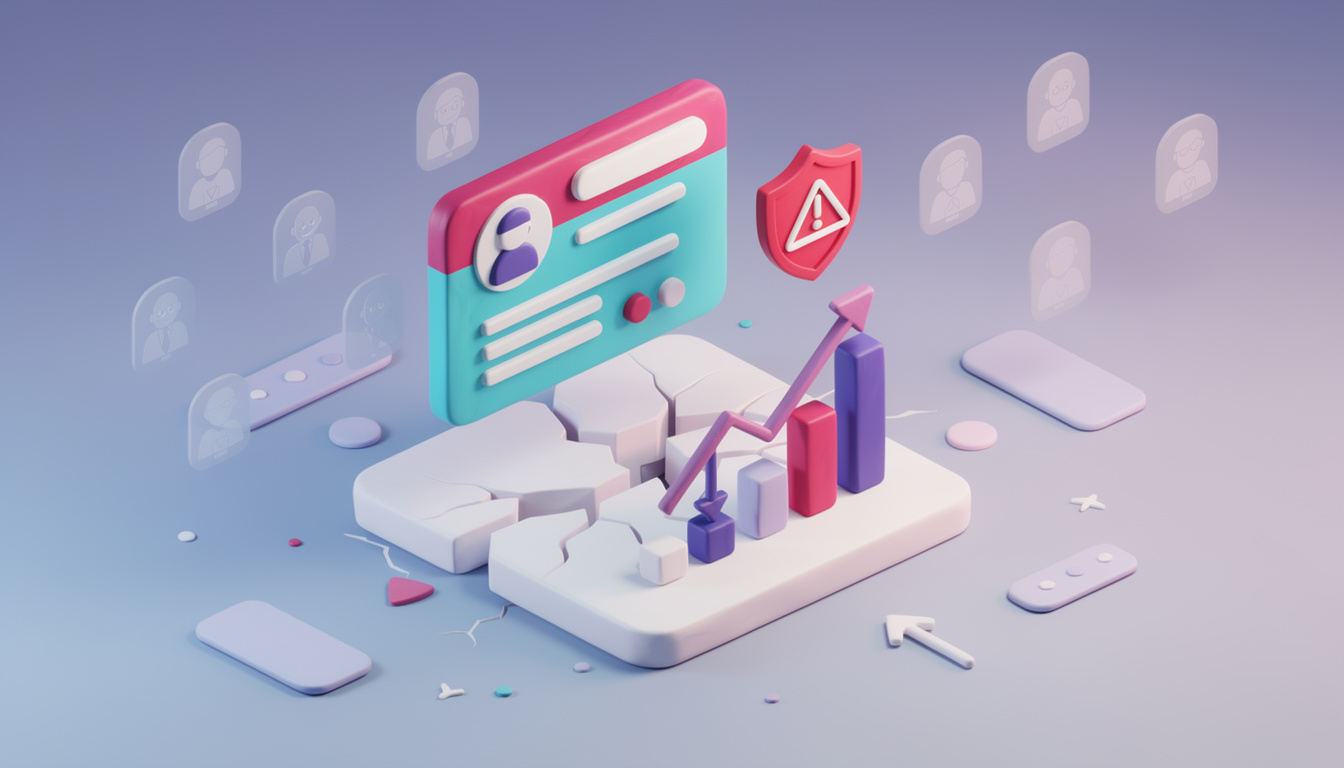
Does LinkedIn ban you for buying followers? The short answer
LinkedIn can restrict or permanently ban accounts for buying followers, but ban risk varies by order size, delivery speed, and panel quality — most first-time buyers face engagement suppression before an outright ban. The platform's enforcement is not binary. It runs on a tiered ladder, and most buyers hit the lower rungs — silent reach reduction and follower removal — long before they see a suspension notice. That does not make the risk acceptable. It makes it harder to see until real damage has already been done.
This piece covers what the platform's own published terms actually say, what the enforcement tiers look like in practice, and where the data is thin — because most of what ranks on this query is either vendor marketing dressed as advice or deterrent content built on statistics with no methodology behind them.
What LinkedIn's own terms say about bought followers
The binding document is the LinkedIn User Agreement, specifically Section 8.2, titled "Dos and Don'ts." The relevant prohibitions are quoted here directly from that page as it reads at time of publication:
> "Don't: Create a false identity on LinkedIn, misrepresent your identity, create a Member profile for anyone other than yourself (a real person), or use or attempt to use another's account."
> "Don't: Develop, support or use software, devices, scripts, robots or any other means or processes (including crawlers, browser plugins and add-ons or any other technology) to scrape the LinkedIn Services or otherwise copy profiles and other data from the Services."
> "Don't: Use bots or other automated methods to add connections, follow people, send messages, post content, or take any other action."
Buying followers from an SMM panel violates the third prohibition directly. The followers are delivered by automated means — bot accounts, click farms, or incentivised fake profiles — and that delivery mechanism is what the agreement targets, not the buyer's intent. LinkedIn's terms do not distinguish between a buyer who knew the followers were fake and one who did not. The violation is the result, not the motive.
Source: LinkedIn User Agreement, Section 8.2
Does LinkedIn actually ban accounts for buying followers, or just restrict them?
This is the question that most ranking content refuses to answer precisely, because the honest answer is: it depends on which enforcement tier activates first.
LinkedIn's enforcement against inauthentic engagement runs in at least three observable stages:
Stage 1 — Content suppression / shadow restriction. LinkedIn's algorithm scores content distribution using engagement signals: likes, comments, shares, dwell time. When a profile accumulates a large block of followers who never interact — because they are bot accounts with no real behaviour — the follower-to-engagement ratio collapses. LinkedIn's distribution system interprets that ratio as a signal of low-quality content and reduces organic reach accordingly. The account is not suspended. The user is not notified. Posts simply reach fewer people. This is the stage most buyers actually reach, and it is invisible until you compare post impressions before and after the purchase.
Stage 2 — Follower removal. LinkedIn actively removes accounts it identifies as inauthentic. When it does, bought followers disappear from the account's follower count. This happens in enforcement sweeps rather than in real time, which means a buyer may see their count hold for days or weeks before a removal event collapses it. The drop-rate problem — followers purchased today disappearing at Day 7, Day 30, or Day 90 — is a direct consequence of LinkedIn's ongoing fake-account removal. Panels that offer refill policies are acknowledging this dynamic without naming it.
Stage 3 — Account restriction or permanent ban. Outright account suspension is less common as a first response to a follower purchase alone, but it is not rare when follower buying is combined with other signals: a sudden spike in connection requests, automated messaging, or a pattern of behaviour that triggers LinkedIn's fraud detection. The ban can be temporary (requiring identity verification to restore access) or permanent.
The data on exactly how many accounts reach Stage 3 from a follower purchase alone is thin. No independent researcher has published a controlled study with a real sample. Anyone citing a specific suspension-rate percentage without a linked methodology is giving you a number they invented.
Is buying LinkedIn followers for a company page safer than a personal profile?
The risk profile is not identical, and the difference matters for SMM buyers making a channel decision.
A company page does not carry the same identity stakes as a personal profile. LinkedIn cannot suspend your personal account for activity on a company page in the same direct way. Company pages can be removed or restricted independently. However, the company page admin — always a personal profile — can be flagged for creating or managing an inauthentic page, which creates a secondary exposure path back to the individual account.
A personal profile tied to LinkedIn Premium or Sales Navigator is in a different risk category. LinkedIn holds an active billing relationship with Premium subscribers. Those accounts are monitored for compliance with the platform's commercial terms as a condition of that relationship. A Premium account that triggers inauthentic behaviour flags is more likely to receive a formal restriction notice than a free account showing identical signals, because LinkedIn has a documented commercial relationship to enforce against and a revenue record that identifies the account as real and accountable.
This asymmetry is not stated explicitly in LinkedIn's published terms, but it follows logically from the way platform enforcement operates across social networks: paid accounts with verified payment information are higher-value targets for formal enforcement because they can be suspended cleanly, while free accounts may simply be shadow-restricted.
How does LinkedIn detect bought followers?
LinkedIn's detection does not rely on a single signal. It operates across several dimensions simultaneously:
- Account behaviour patterns. Bot and click-farm accounts follow predictable patterns: they are created in batches, have incomplete profiles, show no organic posting history, and exhibit login behaviour inconsistent with a real user. LinkedIn's trust and safety systems flag these accounts at the network level before they ever follow your profile.
- Velocity anomalies. A personal profile that gains several hundred followers in 24 hours when it has never moved that fast before is an anomaly. LinkedIn's systems detect follower-velocity spikes. This is the core reason that drip delivery — spreading the order over days or weeks — exists as a risk-mitigation tactic sold by SMM panels. Whether drip delivery materially reduces detection risk is not established by any published test. It may lower velocity signals while doing nothing about the underlying account-quality signals.
- Engagement-to-follower ratio monitoring. A profile whose follower count grows but whose post engagement stays flat is mathematically suspicious. LinkedIn's algorithm uses this ratio as both a content-distribution signal and an authenticity signal.
- Network graph analysis. Fake accounts cluster. If the accounts following you also follow hundreds of other profiles in the same timeframe, LinkedIn's graph analysis can identify the cluster as inauthentic even if each individual account looks borderline acceptable in isolation.
What happens to your SSI score when you buy followers?
LinkedIn's Social Selling Index (SSI) is a score from 0 to 100 that measures four components: establishing a professional brand, finding the right people, engaging with insights, and building relationships. It is primarily relevant to Sales Navigator users.
Bought followers do not improve SSI. SSI's "establishing a professional brand" component is weighted toward profile completeness and content engagement, not raw follower count. Followers who never interact contribute nothing to that component score. Worse, if bought followers trigger a reach suppression event at Stage 1, the reduced engagement on your posts can actively lower the "engaging with insights" component over time.
For Sales Navigator subscribers, a declining SSI is not a cosmetic problem. Sales Navigator's prospecting tools surface results partly based on SSI. A subscriber paying for Sales Navigator who also buys followers is simultaneously damaging the tool they are paying for and increasing their personal profile's enforcement exposure.
Does gradual drip delivery reduce the ban risk?
Drip delivery is a real product feature sold by SMM panels. The theory is that a slower follower velocity looks more organic to LinkedIn's detection systems. The theory is plausible. The evidence that it works is absent.
No panel has published a controlled comparison of bulk delivery versus drip delivery on the same account type, measuring detection rates or account restriction events across a meaningful sample. The claim that drip delivery reduces ban risk is a marketing assertion. It may be partially true for the velocity-signal dimension of detection while being irrelevant to the account-quality and network-graph dimensions. Treating drip delivery as a meaningful safety guarantee is not supported by available evidence.
The drop-rate problem is also unaffected by delivery speed. Followers delivered gradually are still bot or low-quality accounts. When LinkedIn runs an enforcement sweep against fake accounts, it removes them regardless of when they arrived.
What the terms say, stated plainly
LinkedIn's User Agreement prohibits buying followers. The mechanism of delivery — bot accounts, automated follows, click farms — violates Section 8.2 regardless of what any panel calls the product. The enforcement consequence is not always an immediate ban. It is often something quieter: reach that stops working, followers that disappear, an SSI that drifts down. The ban is the outcome that gets named. The slow degradation is the outcome that actually happens most often.
The gap in the market for this query is not opinion. It is data: real orders on named panels, measured drop rates at Day 7 and Day 30, documented reach deltas before and after purchase, and a mapped comparison of bulk versus drip delivery outcomes. That data does not exist in any published form as of this writing. Until it does, any risk estimate beyond what the terms themselves say is speculation — including this one.
Questions we get asked
Does LinkedIn ban you for buying followers outright, or does it start with a warning?
LinkedIn's enforcement is tiered. The most common first consequence is content suppression — reduced algorithmic reach — not an account ban. Temporary or permanent bans occur but are more likely when follower buying is combined with other policy violations such as automated messaging or mass connection requests.
Does LinkedIn's User Agreement explicitly prohibit buying followers?
Yes. Section 8.2 of the LinkedIn User Agreement prohibits using bots or automated methods to follow people or take any other action on the platform. Since SMM panel followers are delivered through automated or bot-based means, every such order is a terms violation. Source: https://www.linkedin.com/legal/user-agreement
Is buying followers for a LinkedIn company page safer than buying them for a personal profile?
Company pages can be restricted or removed independently of the admin's personal profile, which creates some separation. However, LinkedIn Premium and Sales Navigator subscribers on personal profiles face higher enforcement sensitivity because LinkedIn holds an active payment relationship with those accounts and monitors them under commercial terms.
Do bought LinkedIn followers drop off over time?
Yes. LinkedIn runs ongoing enforcement sweeps that remove accounts identified as fake or inauthentic. Followers purchased from bot-based or low-quality panels are among the accounts targeted in these sweeps. Drop events are not continuous — they tend to occur in batches — so a buyer may see their count hold for weeks before a sudden reduction.
Does drip delivery actually reduce the risk of LinkedIn detecting bought followers?
Drip delivery may reduce follower-velocity anomalies, which is one detection signal. It does not address the account-quality signals or network-graph clustering that LinkedIn's systems also use. No published controlled test has measured whether drip delivery meaningfully lowers restriction or ban rates compared to bulk delivery.
What happens to your LinkedIn SSI score if you buy followers?
Bought followers do not improve SSI because the score's components are weighted toward content engagement and relationship-building activity, not raw follower count. If bought followers trigger algorithmic reach suppression, post engagement may decline, which can lower SSI's 'engaging with insights' component over time.
Sources
- 1 LinkedIn User Agreement — Section 8.2: Dos and Don'ts LinkedIn Accessed 2026-07-20
- 2 LinkedIn Social Selling Index LinkedIn Sales Solutions Accessed 2026-07-20
- 3 LinkedIn Professional Community Policies LinkedIn Accessed 2026-07-20