Does Instagram ban you for buying followers? The 5 real outcomes
Instagram rarely bans accounts for buying followers — but the five enforcement tiers it does use can quietly destroy reach and revenue.
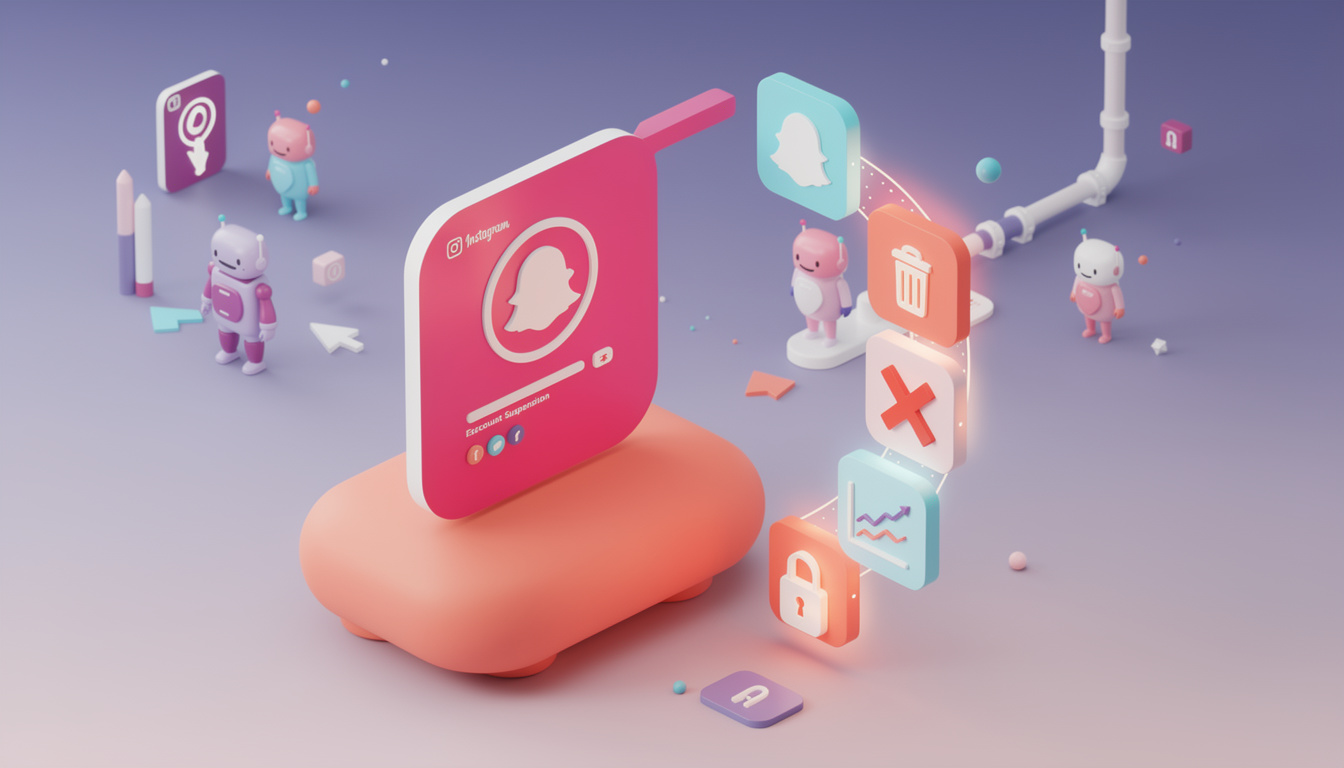
Instagram rarely bans accounts solely for buying followers; it typically purges the fake accounts instead — but bot-grade followers delivered instantly can trigger reach suppression within 48 hours.
That opening sentence is the one most articles in this space refuse to write, because it is complicated. It is not a clean yes or a clean no. It is five different outcomes, ranked by how often each one actually happens, grounded in what Instagram's own published policy says it will do.
This is that article.
Does Instagram ban you for buying followers — or does something else happen first?
The short answer is: Instagram almost never leads with a ban. It leads with quieter, more damaging moves.
The platform has five enforcement tiers it can apply to an account that has bought followers. They escalate in severity, and most buyers only ever experience the first two.
| Enforcement tier | What it is | How common |
|---|---|---|
| Follower purge | Fake accounts removed in bulk enforcement sweeps | Most common |
| Reach suppression | Algorithmic downrank; content shown to fewer real users | Common |
| Shadowban | Content hidden from Explore and hashtag surfaces | Common |
| Account suspension | Temporary login block, usually with a warning | Rare |
| Permanent deletion | Account removed entirely | Rare |
The table above is based on the structure of Instagram's own enforcement language and the pattern of public enforcement reports. We have no internal Instagram data. Where the data is thin — specifically on how frequently each tier is triggered — we say so.
The reason permanent deletion is rare matters, and it is not because Instagram is lenient.
Why outright bans for buying followers are rare — the competitor-sabotage problem
If Instagram deleted every account that received fake followers, it would hand bad actors a weapon. A competitor, an ex-partner, or a troll could buy 10,000 bot followers for any account and get it deleted. Instagram's own engineers have acknowledged this structural problem in platform design discussions, and the policy reflects it: receiving fake followers is not itself treated as conclusive proof of intent.
This is the most honest thing any piece on this topic can tell you, and almost none of the ranking articles bother to say it plainly.
Instagram's enforcement is therefore mostly account-side: it removes the fake accounts themselves, not the recipient account. Meta stated it removed 1.1 billion fake accounts in Q4 2024 alone, as reported in the Meta Transparency Report. That figure covers Facebook and Instagram. When those removals happen, followers purchased from bot-grade panels evaporate — not because the buyer was caught, but because the supplier's inventory was caught.
What does Instagram's own policy actually say?
Here is what Instagram's published terms say, quoted directly.
From the Instagram Terms of Use, Section 10 ("Additional rights we retain"), combined with the platform's Community Guidelines:
> "You can't do anything to artificially boost likes, followers, or shares."
That language is from Instagram's Community Guidelines, available at https://help.instagram.com/477434105621119.
The Terms of Use, accessible at https://help.instagram.com/581066165581870, additionally prohibit:
> "Creating accounts or collecting information in an unauthorized manner... [and] selling, licensing, or purchasing any data obtained from us or our services."
Meta's broader Authentic Interactions Policy — the same policy we cited in our piece on whether Facebook bans you for buying followers — applies across both platforms. It prohibits artificially inflating engagement metrics. The purchase of followers is a violation of these terms at the moment of purchase. That is true regardless of whether any enforcement action follows.
How does Instagram detect bought followers?
Instagram does not publish its detection methodology. What is known from its policy documents and public statements is that its integrity systems flag behaviour that deviates from organic patterns. The relevant signals include:
Follower velocity. A sudden spike in follower count — particularly from accounts with no posts, no profile photo, and no activity — is the most commonly cited detection trigger. The figure of "100–200 new followers per day" as a "safe" ceiling circulates widely on forums including BlackHatWorld. It is anecdote, not published data. We will not treat it as fact.
Account quality of the followers themselves. Bot-grade followers — zero posts, generic usernames, created in bulk — are the accounts Meta removes in its enforcement sweeps. "Real-looking" followers sourced from higher-priced panel tiers use aged accounts with content and activity history. They survive longer in sweeps. Whether they are meaningfully safer in terms of reach suppression is a different question, and one the market does not yet have hard data to answer.
Engagement-rate divergence. If an account gains 10,000 followers and its per-post like and comment count does not rise proportionally, Instagram's algorithm reads the follower base as low-quality and reduces distribution accordingly. This is the mechanism behind what buyers experience as a shadowban or reach drop. It is not a manual penalty — it is the algorithm doing exactly what it is designed to do.
Drip-feed delivery — spreading a follower order over days or weeks rather than delivering it instantly — is the panel industry's primary answer to velocity detection. Whether it materially reduces reach suppression is not established by any published data we can point to. The logic is sound; the evidence is thin.
What's the difference between a shadowban and an account ban?
These are treated interchangeably in most buying guides. They are not the same thing.
A shadowban is an algorithmic suppression of content visibility, most commonly on the Explore page and in hashtag results. The account continues to exist, posts continue to appear to existing followers, and the owner may not notice for weeks. Instagram has formally acknowledged reach limits applied to accounts that violate guidelines, without using the word "shadowban," in its content distribution guidelines.
An account ban — either temporary suspension or permanent deletion — is a manual or automated enforcement action that restricts login or removes the account entirely. This is the outcome most people mean when they ask does Instagram ban you for buying followers, and it is the outcome least likely to result from follower purchases alone.
The practical consequence of confusing these two is significant for resellers: a client whose account has been reach-suppressed will report that "buying followers got them banned" when their account is still live and accessible. That claim, repeated across forums, inflates the perceived ban risk beyond what the evidence supports.
Does buying followers hurt my engagement rate permanently?
In most cases where bot-grade followers are purchased: yes, for as long as they remain on the account. Fake followers do not engage. A growing denominator of inactive accounts against a flat or slowly growing numerator of real interactions produces a falling engagement rate. Instagram's algorithm reads low engagement rate as a signal that content is poor or irrelevant, and reduces its distribution accordingly.
The word "permanently" needs a qualifier. If Instagram's enforcement sweeps remove the fake followers, the engagement rate on remaining followers will recover — assuming the real follower base was not also damaged by suppression in the interim. There is no published data on the recovery timeline. Anyone citing a specific number of days should be asked for their source.
Is it illegal to buy Instagram followers?
In most jurisdictions, buying followers is not a criminal act. It is a contract violation — a breach of Instagram's Terms of Use — enforceable by Instagram against the account holder through the enforcement tiers described above.
The legal picture changed materially in August 2024. The FTC published a final rule titled "Rule on the Use of Consumer Reviews and Testimonials," which bans the purchase and sale of fake indicators of social media influence — including followers, likes, and views — when they misrepresent that those indicators reflect real consumer sentiment. The rule sets civil penalties of up to $51,744 per violation.
The enforcement target in that rule is the seller, not the buyer. An individual buying followers for a personal or business account is not the party the FTC rule is written to penalise. But the rule establishes in formal legal language that the practice is considered deceptive, and it creates downstream liability risk for sellers that may affect panel supply chains.
The SMM panel supply chain and what it means for risk
Most retail follower-buying sites are reselling access to upstream panel APIs. What a buyer sees as a "premium" product from one storefront and a "budget" product from another may be sourced from the same upstream provider at different margins. The distinction between panel tiers is real in some cases and cosmetic in others. Without order testing across identified providers over time, the risk gradient between price tiers cannot be mapped with confidence.
We do not have that order data for this piece. We are saying so plainly, because that limit is relevant to any buyer trying to calibrate risk by price.
What the terms say
Instagram's Community Guidelines prohibit artificially boosting followers. Instagram's Terms of Use prohibit actions that inflate metrics inauthentically. Meta's Authentic Interactions Policy extends the same prohibition across its platforms. The FTC's August 2024 rule adds a federal regulatory layer targeting sellers of fake metrics.
None of those documents say Instagram will ban you for buying followers. They say the practice is prohibited, and that Instagram may take action — up to and including account deletion — at its discretion. The documented primary response is follower removal, not account removal. The documented secondary response is algorithmic reach suppression. Account-level bans remain rare and are most commonly associated with buying combined with other simultaneous violations.
The terms do not promise leniency. They reserve the right to delete the account. That right exists from the moment the first follower order is placed.
Questions we get asked
Does Instagram ban you for buying followers?
Instagram rarely issues an outright ban solely for buying followers. Its primary responses are follower removal — via bulk fake-account sweeps — and algorithmic reach suppression. Account suspension or permanent deletion are reserved for repeat or combined violations. However, buying followers is a violation of Instagram's Terms of Use from the moment of purchase, regardless of whether enforcement follows.
Will Instagram delete my account or just remove the followers?
In most documented cases, Instagram removes the fake follower accounts themselves rather than deleting the recipient account. This is partly a deliberate policy design: if receiving fake followers triggered instant deletion, bad actors could weaponise the mechanism against competitors. Permanent account deletion remains possible under Instagram's Terms but is rare when follower buying is the only violation.
How does Instagram detect bought followers?
Instagram's integrity systems flag abnormal follower velocity, low-quality account characteristics in new followers (no posts, no activity, bulk-created profiles), and engagement-rate divergence — where follower count rises without a corresponding rise in likes or comments. The platform does not publish specific detection thresholds.
What is a shadowban and how is it different from a ban?
A shadowban is an algorithmic suppression of content visibility, primarily on Explore and in hashtag results, without the account being suspended or deleted. An account ban — temporary or permanent — restricts login or removes the account entirely. Most buyers who experience consequences after purchasing followers encounter reach suppression, not an account ban.
Does drip-feed delivery reduce the risk of getting banned?
Drip-feed delivery — spreading a follower order over days rather than delivering it instantly — is designed to reduce follower-velocity signals that detection systems flag. The logic is coherent. Whether it materially reduces reach suppression in practice is not established by published data. Treat claims of a specific 'safe' daily limit as anecdote unless a source is provided.
Is it illegal to buy Instagram followers?
In most jurisdictions, buying followers is not a criminal act — it is a breach of Instagram's Terms of Use. The FTC's August 2024 rule on fake indicators of social media influence sets civil penalties up to $51,744 per violation, but targets sellers, not individual buyers. The rule nonetheless establishes in federal regulatory language that the practice is considered deceptive.
Can someone buy followers for a competitor's account to get them banned?
Yes, this is technically possible, and it is one reason Instagram's enforcement policy does not treat the receipt of fake followers as automatic proof of intent. Instagram is aware of the competitor-sabotage vector. This is the clearest structural reason why outright bans for buying followers remain rare.
Sources
- 1 Instagram Community Guidelines Instagram / Meta Accessed 2026-07-19
- 2 Instagram Terms of Use Instagram / Meta Accessed 2026-07-19
- 3 Instagram Content Distribution Guidelines Instagram / Meta Accessed 2026-07-19
- 4 Meta Community Standards Enforcement Report Q4 2024 Meta Transparency Center Accessed 2026-07-19
- 5 Rule on the Use of Consumer Reviews and Testimonials (Final Rule, August 2024) Federal Trade Commission Accessed 2026-07-19